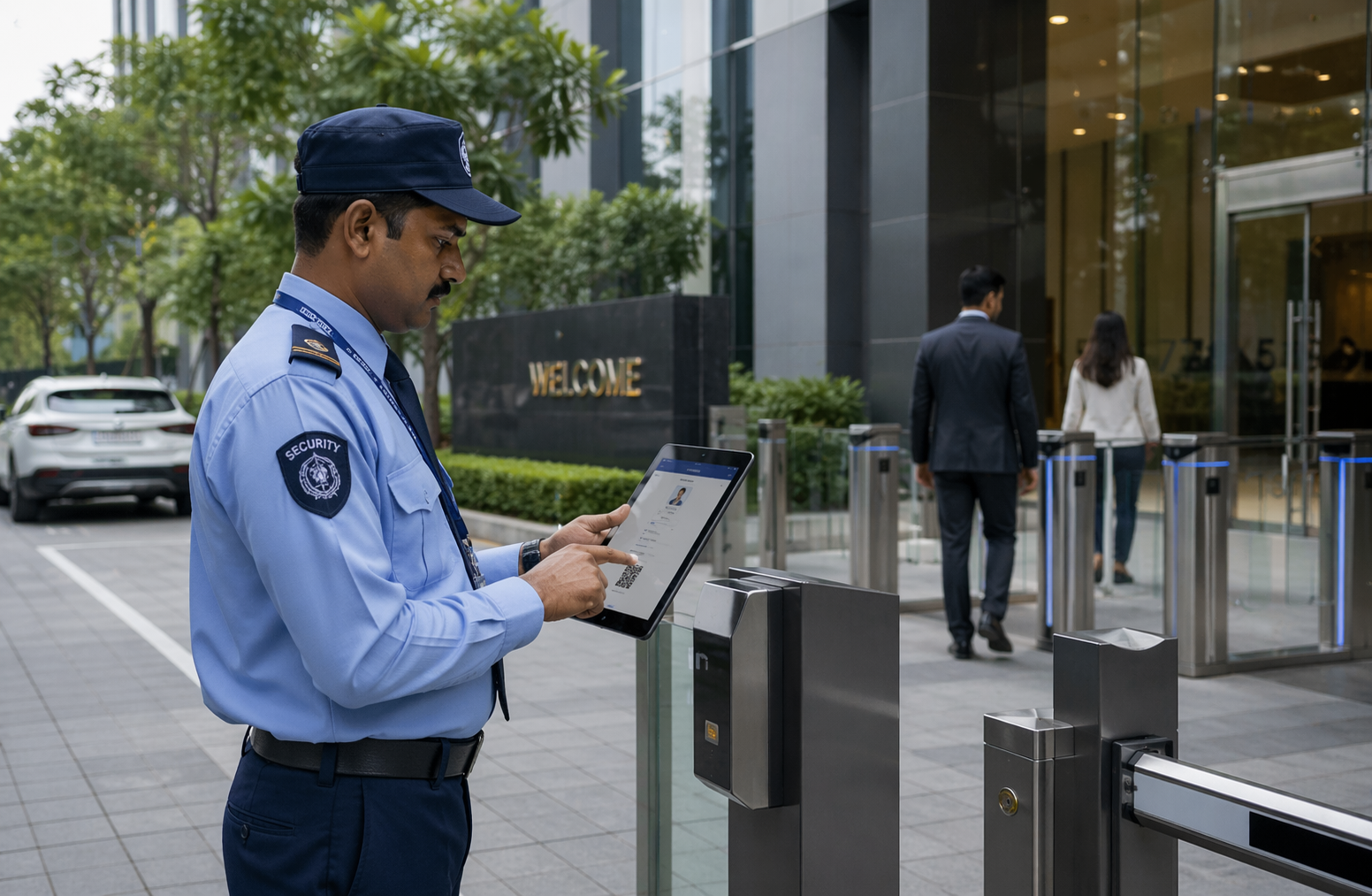







If you run a private security agency in India, PSARA compliance is not optional.
It never was.
But most agencies - especially those expanding into new states - treat it as an afterthought. That's where the real operational and reputational risk begins.
The Private Security Agencies Regulation Act, 2005 (PSARA) is the central legislation that governs all private security agencies operating in India.
It mandates that:
The Act is administered at the state level through the Private Security Agencies Regulation Act Rules notified by each state government.
For the official Act text, refer to the Ministry of Home Affairs, Government of India.
Any entity that:
Even a two-guard deployment operation requires licensing.
There are no exemptions for small agencies.
To obtain a PSARA licence in most states, the applicant must:
The controlling authority — typically the state's Home Department — verifies credentials before issuing the licence.
This is where most growing agencies make their first mistake.
PSARA licences are not portable across states.
If your agency is headquartered in Jharkhand and you want to deploy guards in West Bengal or Odisha — you need a separate licence in each state.
The process, fee structure, and documentation requirements vary:
| State | Controlling Authority | Typical Processing Time |
| Jharkhand | Home Department, Ranchi | 30–60 days |
| West Bengal | PSARA Cell, Kolkata Police Commissionerate | 45–90 days |
| Odisha | Home Department, Bhubaneswar | 30–60 days |
Failure to obtain state-specific licences before deploying personnel is a direct regulatory violation — and a commercial liability when large institutional or government clients conduct vendor due diligence.
Operating without a valid PSARA licence exposes the agency to:
Notably, clients in sectors like Metro Rail, banking, hospitals, and government facilities now verify PSARA status as a standard RFQ condition.
Some security agencies also operate under DGR (Directorate General of Resettlement) empanelment, which governs agencies that deploy ex-servicemen guards.
DGR empanelment and PSARA licensing are separate requirements — but both may apply if your agency:
For agencies targeting Metro Railway, defence establishments, or Central PSU facilities, both compliances become essential.
If you are unfamiliar with how DGR frameworks interact with wage and billing structures, this is a core area to address before pursuing Central sphere contracts.
Compliance is not just a legal checkbox. It's a trust signal.
When a client shortlists your agency, they are asking two questions:
An agency with a valid, multi-state PSARA licence, proper guard training records, and documented compliance processes answers both questions before the meeting begins.
As we covered in our earlier post on why security agencies lose clients, inconsistency and lack of systems are the primary reasons clients switch vendors. Regulatory non-compliance is one of the fastest ways to expose that inconsistency.
Expansion into new state markets — whether Odisha, West Bengal, or beyond — cannot begin without PSARA licensing in place.
The sequencing matters:
Agencies that reverse this order either operate in a grey zone or face mid-contract disruption.
At DUPI, we help facility management and security companies build structured growth strategies that account for regulatory timelines, not just sales pipelines.
Whether you need to position your compliance credentials in client proposals or structure your market entry into a new state, a clear plan from the start prevents expensive corrections later.
For operational tracking, documentation, and client communication during expansion, a CRM and automation setup also reduces the overhead that often derails compliance-heavy growth phases.
PSARA is not a formality.
It is the foundation on which every legitimate private security business operates.
If your agency is planning to expand geographically, pursue government contracts, or position for institutional clients — multi-state PSARA compliance is the first step, not the last.